Constant pressure well systems: how they work and what fails
If there is a box with a display on the wall where most wells have a small gray pressure switch, you have a constant pressure system. It fails differently from a standard well, and the first thing to do when it stops is read the screen.
In short
- A constant pressure system swaps the pressure switch for a drive that speeds the pump up and down, so it works with a much smaller tank.
- When it stops, write down the fault code on the drive before anything else. It is the fastest diagnosis you will get.
- The drive and the pressure sensor fail more often than the pump, and both are surface repairs rather than a rig job.
How it works
A standard well runs on two numbers. The pressure switch starts the pump when pressure falls to the cut-in setting and stops it at the cut-out, and a large pressure tank carries the house in between. The pump is either fully on or off.
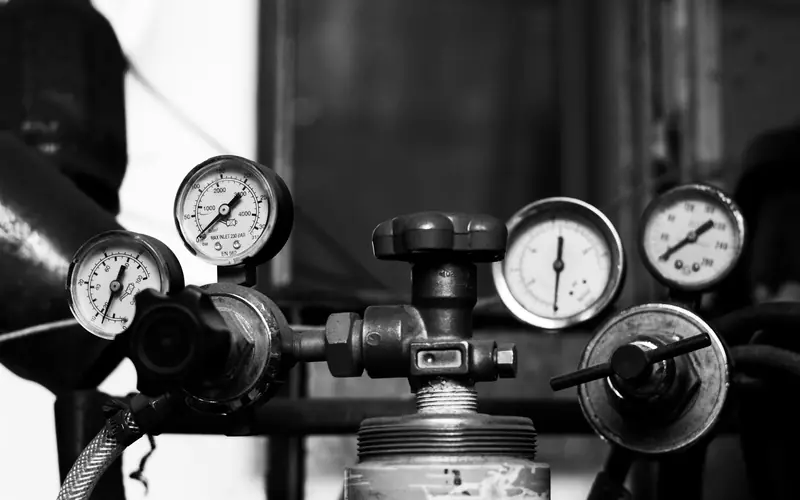
A constant pressure system replaces the switch with a variable frequency drive, usually shortened to VFD, and a pressure sensor. The drive reads the sensor and speeds the pump up or down to hold one pressure: slow for a single bathroom faucet, faster when the shower, the washer and a hose are all running.
A constant pressure system replaces the on-at-40, off-at-60 pressure switch with a variable speed pump and a controller that reads pressure many times a second.
Mid Atlantic Water, Constant pressure well systems
Because the pump no longer has to be carried by a big cushion of stored water, the tank shrinks. Manufacturers describe needing only a small pressure tank in most installations, and one supplier puts the usual size at 2 to 20 gallons, against 20 to 44 for a standard system.
Mid Atlantic Water, Constant pressure well systems: how they work · Franklin Electric, SubDrive Utility variable frequency drive
How to tell which one you have
Go to where the water line comes into the house. A standard system has a fist-sized gray pressure switch on the pipe beside a tank that is usually the height of a water heater. A constant pressure system has a drive mounted on the wall, normally with a display or indicator lights, a much smaller tank, and a sensor on the pipe in place of the switch.
It matters because the advice for the two systems splits at this point. The pressure switch lever that restarts so many standard wells after a power cut does not exist on a constant pressure system. The five checks for a standard well still start with the breaker, but after that you are following the drive.
When it stops: read the drive first
The drive watches the pump and shuts it down to protect it, and it tells you why. Franklin Electric's SubDrive, one of the common models, lists built-in protection against a pump running dry, an overloaded or locked pump, short and open circuits in the output, and low incoming voltage. Each of those shows as a different fault.
Franklin Electric, SubDrive Utility variable frequency drive
- Write down the exact code or light pattern before you touch anything. It is the fastest diagnosis you will get, and the contractor will ask for it.
- Check the breaker, the same as on any well.
- Try one power reset if the drive's manual allows it: breaker off, wait about 30 seconds, breaker on. Many one-off faults clear this way.
- If the same fault comes straight back, stop. A fault that returns immediately is reporting a real problem, and resetting it again does not fix it.
Southern California Well Service, Constant pressure system repair
The setpoint on a constant pressure drive is adjustable, and it is tempting to raise it until the house feels like city water. Plumbing and fixtures on a well were not necessarily installed for that, and one supplier warns against it directly. If pressure has dropped from what it used to be, something has changed, and that is the thing to find.
Mid Atlantic Water, Constant pressure well systems: how they work
What usually fails, and what it costs
On a constant pressure system the parts on the wall fail more often than the pump, and they are surface repairs rather than a rig job. The figures below are one contractor's published prices, from Southern California. Nobody has published a Marion County price list for these repairs, so treat them as a way to judge whether a quote is in the normal range, not as a local price.
| What failed | How it shows up | Published price |
|---|---|---|
| Pressure sensor | No water or erratic pressure while the pump itself is fine | $125 to $300 |
| Drive settings | Settings wrong or lost, so the pressure is off | $100 to $200 |
| Wiring | Short circuit or open circuit faults on the drive | $120 to $350 |
| The drive itself | Dead display, or faults that will not clear | $1,400 to $2,900 |
| The pump | The drive runs it but little or no water arrives | $900 to $3,000 |
| A diagnostic visit | Before any of the above | $75 to $150 |
Lightning and the drive
Central Florida has long been called the lightning capital of the United States, and a constant pressure system puts sensitive electronics between your panel and a long cable running down into wet ground. A drive that dies after a storm is a reasonable suspect before the pump is. Surge protection for the pump motor is made for exactly this, and it is worth asking whether yours has any. What lightning does to a well, and what an arrestor does.
National Weather Service Melbourne, Lightning information · Franklin Electric, Surge arrestor for submersible motors
Is a constant pressure system worth it?
The case for one is steady pressure through the whole house, a pump that ramps up and down instead of starting and stopping, and a tank that fits on a wall. The case against is cost and complexity: one supplier puts a conversion at roughly $3,500 to $4,000 installed when it replaces an existing pump, the electronics are one more thing that can fail, and repairs need a well contractor rather than a general plumber.
The same supplier's advice is the sensible version: consider one for a new well, or when the pump is being replaced anyway, rather than tearing out a standard system that works.
Mid Atlantic Water, Constant pressure well systems: how they work
Questions
The ones people search for
What is a constant pressure well system?
A well system that uses a variable frequency drive and a pressure sensor instead of a pressure switch. The drive changes the pump's speed to hold one steady pressure, rather than switching the pump fully on and off between two settings, so it can work with a much smaller pressure tank.
Why is my constant pressure well pump not working?
Start with the drive's display: it shows a fault code for most failures, including a dry-running pump, an overload, a wiring fault and low voltage. Write the code down, check the breaker, and try one power reset. If the same fault returns immediately, the code is pointing at a real problem, most often the pressure sensor, the wiring or the drive rather than the pump.
How much does a constant pressure system repair cost?
One contractor's published prices run from $125 to $300 for a pressure sensor and $1,400 to $2,900 for a replacement drive, with a diagnostic visit at $75 to $150. Those are California prices, and no Marion County list has been published, so use them to judge whether a quote is reasonable rather than as a local price.
Does a constant pressure system still need a pressure tank?
Yes, but a small one. Manufacturers describe needing only a small tank in most installations, and one supplier puts the usual size at 2 to 20 gallons, compared with 20 to 44 gallons for a standard pressure switch system.
Before you hire anyone
Calling a well contractor? Check three things first.
- 1The license. Every Florida water well contractor is licensed. Ask for the number and look it up at the state's contractor verification clearinghouse.
- 2The diagnosis before the price. A pressure switch reading, the tank's air charge and the cable readings, before anybody quotes a new pump. The six questions to ask.
- 3The permit, if a rig is coming. A new well needs one before drilling starts, and it is the contractor's job to have it. Who issues it.
Public offices, free to call
Ocala Well Water is an independent guide. It takes no calls, collects no details, and no company pays to be mentioned. How this site works.