Pump problems
Well pump short cycling, and the tank that is usually behind it
Motors do not wear out from running. They wear out from starting. A pump that clicks on and off every few seconds is spending its life in a week, and the cause is usually a tank in the garage.
In short
- Short cycling is a pump starting and stopping every few seconds, and it wears the motor out early.
- The usual cause is a waterlogged pressure tank or an air charge that has leaked away.
- With the system drained, the tank should read 2 psi below the switch's cut-in pressure, per the tank maker Amtrol.
Short cycling means the pump switches on, runs for a few seconds, switches off, and repeats, sometimes every time anybody opens a tap. You hear it as a click in the garage, or see it as a pressure gauge needle bouncing between two numbers. Nothing seems wrong with the water, which is why it gets ignored, and why it is the most expensive noise a well makes.
A submersible motor takes its biggest electrical and mechanical stress at start-up. Motor manufacturers publish limits on how many starts a day their motors are built for, because every start heats the windings and loads the parts. A pump that should start a few dozen times a day and instead starts hundreds of times is being worn out on a schedule measured in months.
Why it happens
The pressure tank exists to prevent exactly this. It holds a cushion of compressed air above a rubber bladder, so the house can draw a few gallons before pressure falls far enough to call the pump. When that cushion is gone, the pump is the only thing holding pressure, and it has to start for every glass of water. The usual causes, in order of how often they turn up:
- A failed bladder. The rubber has split, water has filled the air side, and the tank is waterlogged. This is the commonest cause and it means a new tank.
- A pre-charge that has leaked down. The bladder is intact but the air charge has seeped out over the years. This can be fixed with a pump and a gauge.
- A clogged pressure switch tube. The short pipe the switch sits on can fill with iron and scale, which is common in Marion County water, so the switch reads pressure wrongly and chatters.
- A leak or a failed check valve. If the pump cycles when nobody is using water, pressure is escaping somewhere: a running toilet, a dripping irrigation valve, or a check valve letting water fall back down the well.
- A tank that is too small. Common on older homes that later added irrigation or a second bathroom. Not a failure, but the same result.

The test, with a tire gauge
You can check the first two causes yourself in about twenty minutes with an ordinary tire pressure gauge. The tank has an air valve, the same kind as on a car tire, usually under a plastic cap on top.
- Switch the pump off at the breaker.
- Open a tap near the tank and let the system drain until the flow stops. The tank must be empty of water for the reading to mean anything.
- Press the gauge onto the air valve and read it.
- Press the valve pin briefly. If water comes out instead of air, the bladder has failed. Stop here; the tank needs replacing.
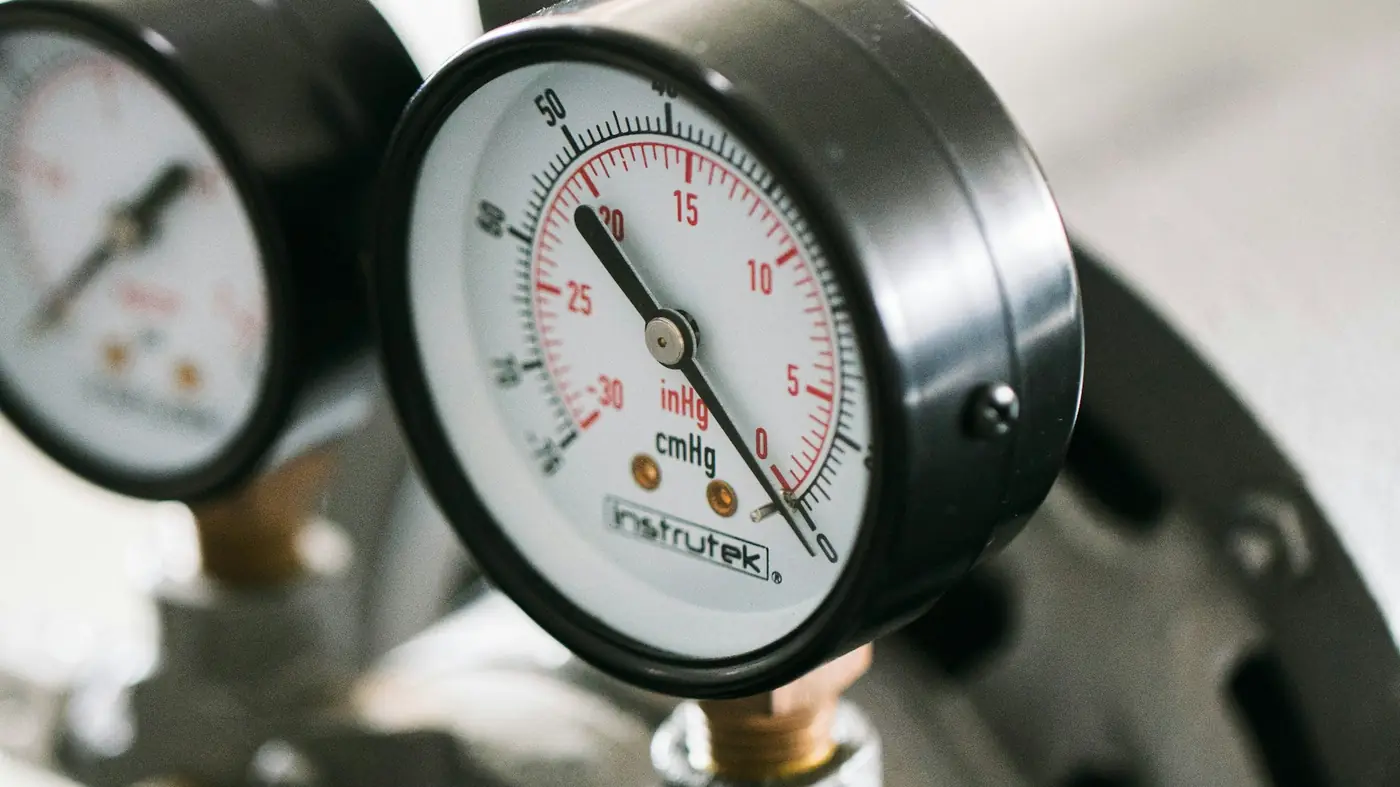
- If it is air, compare the reading with your pressure switch setting. The tank maker Amtrol specifies a pre-charge 2 psi below the switch's cut-in pressure, so 38 psi for a 40/60 switch and 28 psi for a 30/50 switch.
- If it is low, top it up with a bicycle pump or compressor to that figure, close the tap and switch the pump back on.
Amtrol, Well-X-Trol installation and operation manual
Open a tap and time it. A system in good order lets you draw water for a while before the pump starts, then runs the pump steadily for a minute or more before it shuts off. If the pump starts almost at once and stops within seconds, the tank is not doing its job, whatever the gauge on the pipe says.
If the pump cycles when nothing is running
Turn off every tap, make sure the irrigation is off, and watch the pressure gauge for fifteen minutes. If the needle creeps down and the pump kicks on to top it up, water is leaving the system. Check the toilets first: a drop of food coloring in the tank that shows in the bowl without flushing is a leaking flapper. If the house is tight, the loss is likely a check valve or a leak between the well and the house, and that is a contractor call.
What the fix costs
Re-charging a tank with an intact bladder costs nothing but time. A new tank is the common repair, and a published 2026 guide puts professional pressure tank replacement at $400 to $2,300, with most standard residential jobs between $600 and $1,500. A new pressure switch is $45 to $75 in parts when it is done at the same time.
The Well Guide, Pressure tank replacement cost
Set that against the published Florida range for a pump replacement, roughly $1,000 to $5,000 or more, and the case makes itself: a waterlogged tank left alone is usually how a household ends up paying for both. The full tank cost breakdown, and what a pump replacement involves.
- What is the tank pre-charge, measured with the system drained?
There is a number. A contractor who replaces a tank without taking it has guessed.
- Did water or air come out of the air valve?
Water means a failed bladder and a new tank. Air at a low reading may only need re-charging.
- Was the switch tube clear?
Iron in Marion County water clogs it, and cleaning it is cheap.
- How long has the pump been cycling, and has its current draw been checked?
A pump that has short cycled for a year may already be damaged, and it is better to know before the tank is fixed.
Questions people ask
Is short cycling bad for a well pump?
Yes. Starting is the hardest thing a motor does, and short cycling multiplies the number of starts many times over. It overheats the motor windings and wears the pressure switch contacts, and it is one of the commonest reasons a pump fails years before it should.
How do you fix a well pump that is short cycling?
Find the cause first. Drain the system and check the tank's air pre-charge with a tire gauge. Water from the valve means the bladder has failed and the tank needs replacing. A low air reading can be topped up to 2 psi below the cut-in pressure. If the tank is fine, check the switch tube for clogging and the house for leaks.
How long should a well pump run each cycle?
Long enough to refill the tank's working volume, which on a correctly sized and charged tank is typically a minute or more. A pump that runs for a few seconds at a time is short cycling.
What is the most common cause of short cycling?
A waterlogged pressure tank, where the rubber bladder has failed or the air charge has leaked away. After that come a clogged pressure switch tube, a leak or failed check valve, and a tank too small for the household.
More for Marion County well owners

Before you hire anyone
Calling a well contractor? Check three things first.
- 1The license. Every Florida water well contractor is licensed. Ask for the number and look it up at the state's contractor verification clearinghouse.
- 2The diagnosis before the price. A pressure switch reading, the tank's air charge and the cable readings, before anybody quotes a new pump. The six questions to ask.
- 3The permit, if a rig is coming. A new well needs one before drilling starts, and it is the contractor's job to have it. Who issues it.
Public offices, free to call
Ocala Well Water is an independent guide. It takes no calls, collects no details, and no company pays to be mentioned. How this site works.