Costs
What a well pressure tank replacement costs in Florida
The pressure tank is the cheapest major part of a well system and the one most likely to take the pump with it. Here is what replacing one costs, and how to know it needs replacing at all.
In short
- Professional pressure tank replacement runs $400 to $2,300, with most jobs between $600 and $1,500, per a 2026 cost guide.
- Water coming out of the tank's air valve means the bladder has failed and the tank needs replacing.
- A bigger drawdown means fewer pump starts, which matters on homes that irrigate from the well.
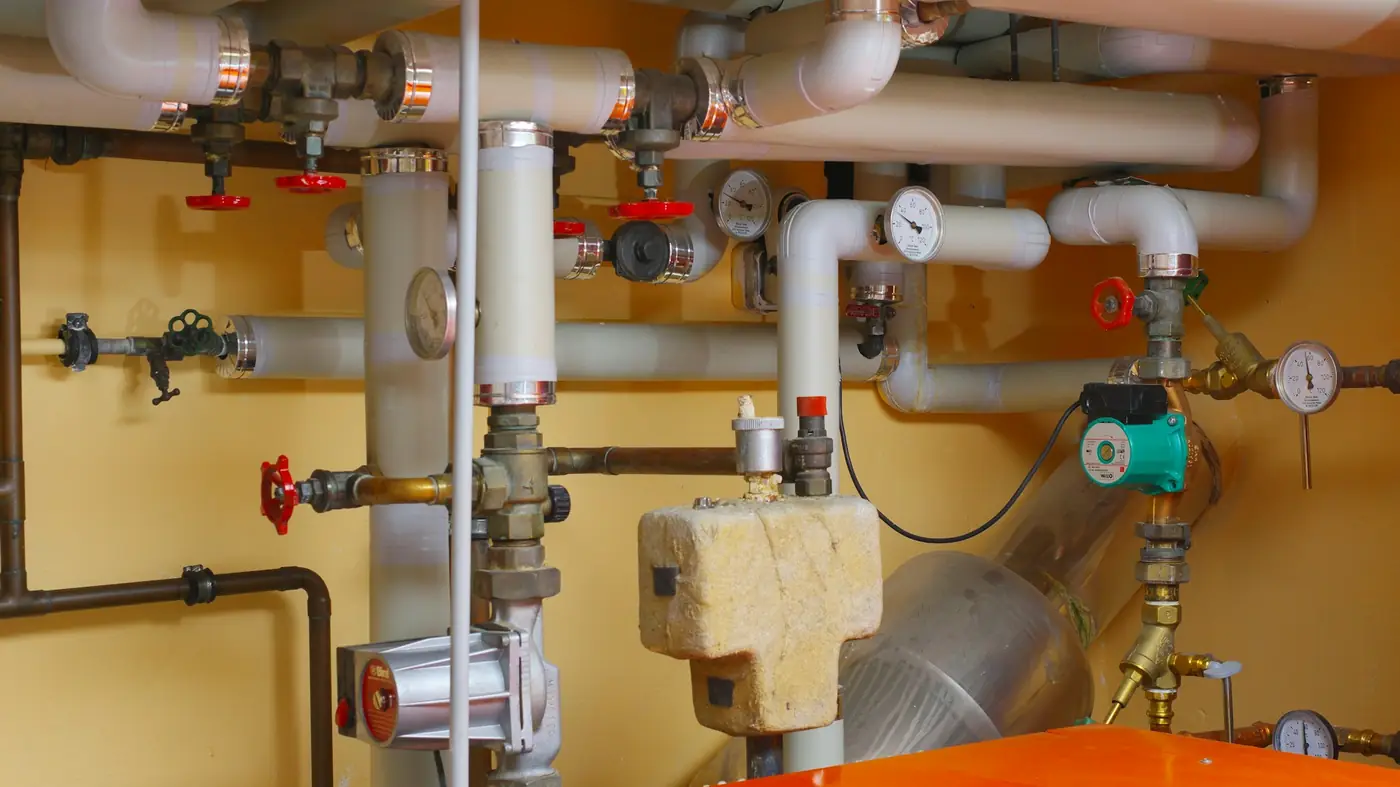
A pressure tank is a steel shell with a rubber bladder inside and a charge of air on one side of it. It is what lets you draw water without the pump starting every time, and when it fails the pump pays the price. It is also the part of a well system most often replaced on a guess, so it is worth knowing both the price and the test before anybody quotes you one.
The published range
A 2026 cost guide for well owners puts professional pressure tank replacement at $400 to $2,300, with most standard residential jobs landing between $600 and $1,500 all in. The spread comes from two things: the size of the tank, and how hard it is to reach.
| Tank size | Tank only | Typical use |
|---|---|---|
| 20 to 32 gallons | $150 to $400 | Smaller homes, low demand |
| 44 to 52 gallons | $250 to $600 | The common residential size |
| 80 to 86 gallons | $450 to $900 | Larger households, irrigation |
| 120 gallons | $700 to $1,400 | High demand, fewer pump starts |
Labor runs $250 to $500 for a straightforward replacement in a garage or utility room, and $400 to $550 where access is awkward. A new pressure switch adds $45 to $75 in parts when it is swapped at the same visit, which is usually worth doing on an old system.
The Well Guide, Pressure tank replacement cost
Signs the tank has actually failed
A tank that needs a top-up of air and a tank that needs replacing look the same from the kitchen. These are the signs that separate them:
- Water from the air valve. With the system drained, press the pin on the air valve. Water means the bladder has split. This is the definitive test and it costs nothing.
- Short cycling. The pump clicks on and off every few seconds while a tap is running. How to test for it with a tire gauge.
- A tank that is heavy all the way up. Knock from top to bottom. A healthy tank sounds hollow near the top. A waterlogged one thuds solid.
- Rust, weeping or a wet floor at the base. A steel shell that has corroded through is finished, whatever the bladder is doing.
- Pressure that swings wildly between strong and weak while one tap runs.
Ask what the pre-charge read with the system drained, and whether water or air came out of the valve. If it was air at a low reading, the tank may only need re-charging to 2 psi below the switch's cut-in pressure, which is what the tank maker Amtrol specifies. That is a few minutes with a pump. Amtrol, Well-X-Trol installation and operation manual
How long a tank lasts
The same guide puts premium tanks at 12 to 20 years, mid-range tanks at 8 to 12, and budget tanks at 5 to 7. The difference between the top and the bottom of that range is usually the price difference between tanks, paid back several times over if it keeps the pump from short cycling.
Bigger is not a sales trick, within reason
What matters in a tank is not its total size but its drawdown, the amount of water it delivers between the pump shutting off and starting again. A bigger drawdown means fewer starts, and fewer starts means a longer pump life. Many Marion County homes run lawn irrigation off the well, which is a long, steady demand, and a tank sized for a small household will cycle hard on an irrigation day. If a contractor recommends going up a size, ask them to explain it in terms of drawdown and starts. That is a real reason. "Bigger is better" on its own is not.
What should be in the quote
- The tank, by make and size
So you can compare like with like between two quotes.
- The pre-charge it will be set to
2 psi below cut-in. If they do not mention it, ask.
- The pressure switch
Replaced or kept, and why. A pitted old switch on a new tank is a false economy.
- The tank tee, gauge and relief valve
The fittings that go with the tank. Cheap to do now, a second visit later.
- Disposal of the old tank
A waterlogged tank is heavy.
- Whether the pump was checked
If the old tank short cycled for months, the pump's current draw is worth a reading.
If the tank died because the pump ran for a year without a cushion, the pump may be next. What a pump replacement costs in Florida, and whether insurance ever pays for either.
Questions people ask
How much does it cost to replace a well pressure tank?
A published 2026 guide puts professional replacement at $400 to $2,300, with most standard residential jobs between $600 and $1,500 including the tank and labor. Size and access are what move the number.
How much does a plumber charge to replace a pressure tank?
The labor share is typically $250 to $500 for an accessible tank and $400 to $550 where access is difficult, on top of the tank itself. Well contractors and plumbers both do this work; ask for the pre-charge setting in writing either way.
What is the average lifespan of a well pressure tank?
Roughly 5 to 7 years for budget tanks, 8 to 12 for mid-range and 12 to 20 for premium ones. A correct pre-charge and a working pressure switch are what let a tank reach the top of its range.
How much is a 20 gallon well pressure tank installed?
The published figures put a 20 to 32 gallon tank at $150 to $400 for the tank alone. Adding typical labor of $250 to $500 gives a rough installed figure of $400 to $900. A 20 gallon tank is small for most households, so ask whether a larger drawdown would reduce pump starts.
More for Marion County well owners

Before you hire anyone
Calling a well contractor? Check three things first.
- 1The license. Every Florida water well contractor is licensed. Ask for the number and look it up at the state's contractor verification clearinghouse.
- 2The diagnosis before the price. A pressure switch reading, the tank's air charge and the cable readings, before anybody quotes a new pump. The six questions to ask.
- 3The permit, if a rig is coming. A new well needs one before drilling starts, and it is the contractor's job to have it. Who issues it.
Public offices, free to call
Ocala Well Water is an independent guide. It takes no calls, collects no details, and no company pays to be mentioned. How this site works.